Teaching English Learners: Effective Instructional Practices
IRIS Center, Vanderbilt Peabody College. Online professional development module, 2 PD hours. Completed March 2025.
IRIS CenterView certificate
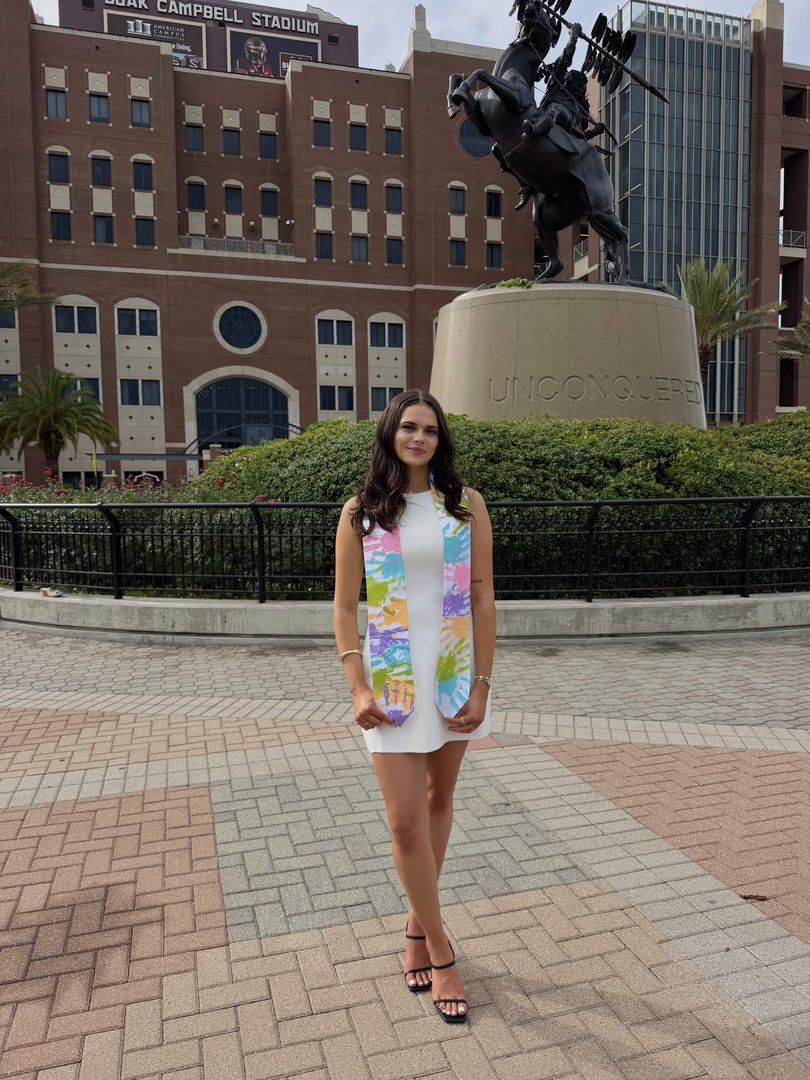
I’m Jessica Harris, an elementary educator in Lake County, Florida. I earned my Bachelor of Science in Elementary Education at Florida State University, and I’m now in the master’s year of the same combined program, on track to finish my M.Ed. in May 2027.
I’ve taught in five clinical placements across four Florida elementary schools, in classrooms from Kindergarten through 4th grade. My most recent placement was in a Title 1 fourth grade room, where I worked up to teaching the full day myself. Those classrooms taught me the things coursework can’t: routines young learners can actually follow, small groups that meet students where they are, and the steady, positive management that keeps a room calm and focused.
Before and during my degree, I worked hospitality jobs: hosting, serving, and leading shifts. Those years built habits I use in the classroom every day, like clear communication, thinking on my feet, patience when everything happens at once, and real warmth with people of every age.
More than anything, I care about how children grow, academically, socially, and emotionally. I want a classroom where every student feels known, and I’m ready to build one.
I believe students learn best in classrooms that feel predictable. When routines are taught clearly, expectations stay consistent, and students feel supported, the room feels safe and steady, and learning has somewhere to happen. A well-managed classroom is not a silent one, though. Students should be able to talk, work together, and solve problems without the room tipping into chaos.
Small groups should feel like an opportunity, never a label. One of my strongest readers was upset when I first pulled her for a word analysis group, because she thought being chosen meant something was wrong. I told her the truth: I picked her because she could lead. She became exactly that for the group, and I have been deliberate ever since about making sure every student at my table knows why I want them there.
Data tells me what to teach next. I have used DIBELS, EasyCBM, Words Their Way spelling inventories, and informal reading inventories to group students, plan instruction, and know when to reteach. A lesson that does not land is information, not a failure.
And because every classroom I have taught in has included multilingual learners, I plan for language alongside content: visuals and modeling, home language treated as an asset, and families treated as partners.
Tallahassee, FL · Combined undergraduate/graduate program
Tallahassee, FL
Certification is in progress and on schedule. Here is exactly where things stand.
Focused on English learners, because every Florida classroom has them.
IRIS Center, Vanderbilt Peabody College. Online professional development module, 2 PD hours. Completed March 2025.
WIDA eWorkshop, 3 hours. Strategies for welcoming and supporting newcomer multilingual students. Completed September 2024.
Dr. Katie Toppel. Maximizing multilingual learners’ language development across every subject, not just reading block.
WIDA. Using cultural humility to inform educational opportunities and build real partnerships with families.
The experience page walks through all five placements, and the portfolio holds the work itself.